


Strategic Sourcing Blueprint for Fashion Footwear Brands
For independent shoe brands and scaling fashion retailers, launching a bespoke high heel line represents both immense commercial opportunity and significant supply chain friction. From translating 2D creative sketches into structural footwear tech packs to navigating tooling capital and fit engineering, successful customization demands a structured OEM/ODM manufacturing roadmap. This comprehensive guide outlines the end-to-end development cycle: from 3D CAD modeling and agile prototyping to material sourcing, heel mold economics, and quality-controlled 500-pair batch production.
The High Heel Customization Bottleneck (And How OEM Partners Solve It)
Developing custom high heels is notoriously complex compared to casual sneakers or flat sandals. Because an elevated heel fundamentally shifts body weight onto a narrow cantilevered base, minor millimeter discrepancies in last contour, heel seat pitch, or shank placement can result in unwearable shoes, prolonged sampling loops, and expensive production delays.
A common challenge for emerging footwear designers is the "Tech Pack Translation Gap": creative design concepts frequently lack technical footwear specifications, leading to multiple failed sample rounds that burn through development budgets.
A true OEM/ODM footwear manufacturing partner functions not merely as an assembly line, but as an engineering extension of your design studio. By combining rapid 3D prototyping, an extensive open-mold last archive, and rigorous fit testing protocols, brands can compress sample lead times from months to days while minimizing financial risk.
The 6-Stage Customization Roadmap
1. Tech Pack Specification & Last Architecture
Every successful custom high heel project starts with a comprehensive Technical Pack. Translating a creative vision into a commercially viable production blueprint requires defining both aesthetic and mechanical parameters.
Essential Components of a Footwear Tech Pack
- 2D & 3D Vector Profiles: Multi-angle views (lateral, medial, top, heel view, and outsole bottom) detailing stitching lines, topline curves, and edge treatments.
- Heel Drop & Pitch Specification: Exact target heel height (e.g., 50mm, 75mm, 85mm, or 100mm) paired with matching heel seat incline angles (typically 4° to 6°).
- Bill of Materials (BOM): Granular material callouts for upper, lining, insole sock, reinforcement stiffeners, shank, and outsole substrate.
- Branding & Hardware Details: Exact logo placement (hot-stamping, metal badging, screen printing), buckle specs, zipper grades, and electroplating finishes.
How Solefina Bridges Incomplete Tech Packs
If your brand only has 2D fashion sketches, mood boards, or reference physical samples, our in-house engineering team converts your concept into a complete factory-ready CAD tech pack within 48 hours, selecting the optimal last geometry and internal reinforcement components to prevent design distortion.
2. 3D Digital Prototyping & Rapid Resin Heel Sampling
Traditional shoe development relied on hand-carved wooden heel masters and multiple rounds of clay modeling, often taking 4 to 6 weeks just to evaluate a new heel silhouette. Modern OEM manufacturing leverages digital engineering to compress this phase into days.
The Rapid Prototyping Workflow (5 to 7 Business Days)
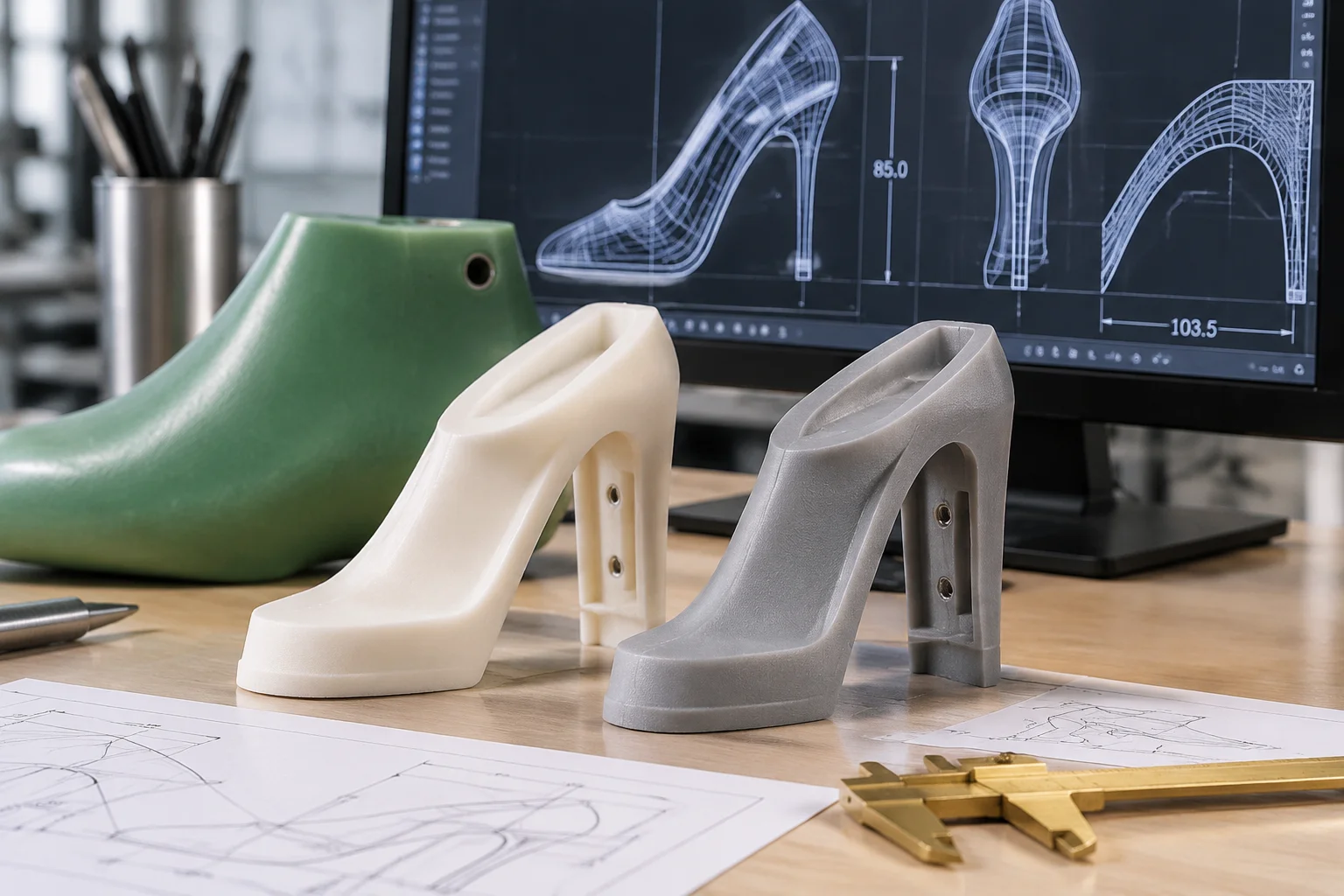
Figure 1: Rapid SLA 3D-printed resin high heel prototypes and digital CAD modeling.
- Parametric 3D CAD Modeling: The 2D heel profile is modeled in Rhino/ShoeMaster, calculating volume, center of gravity, and structural dowel cavity.
- SLA 3D Resin Printing: High-precision stereolithography prints physical prototype heels within 24 hours, allowing designers to inspect curves, taper, and proportions in real life.
- Virtual Last Fitting: Digital last overlay ensures the heel cup curvature precisely matches the shoe last seat, eliminating gaps before any metal tooling begins.
3. Premium Material Curation & Custom Hardware Finishes
Material selection directly defines retail perception, perceived luxury, and step-in comfort. A flexible OEM partner provides direct access to audited tanneries, textile mills, and hardware electroplating facilities.
Material Selection Matrix for Custom High Heels
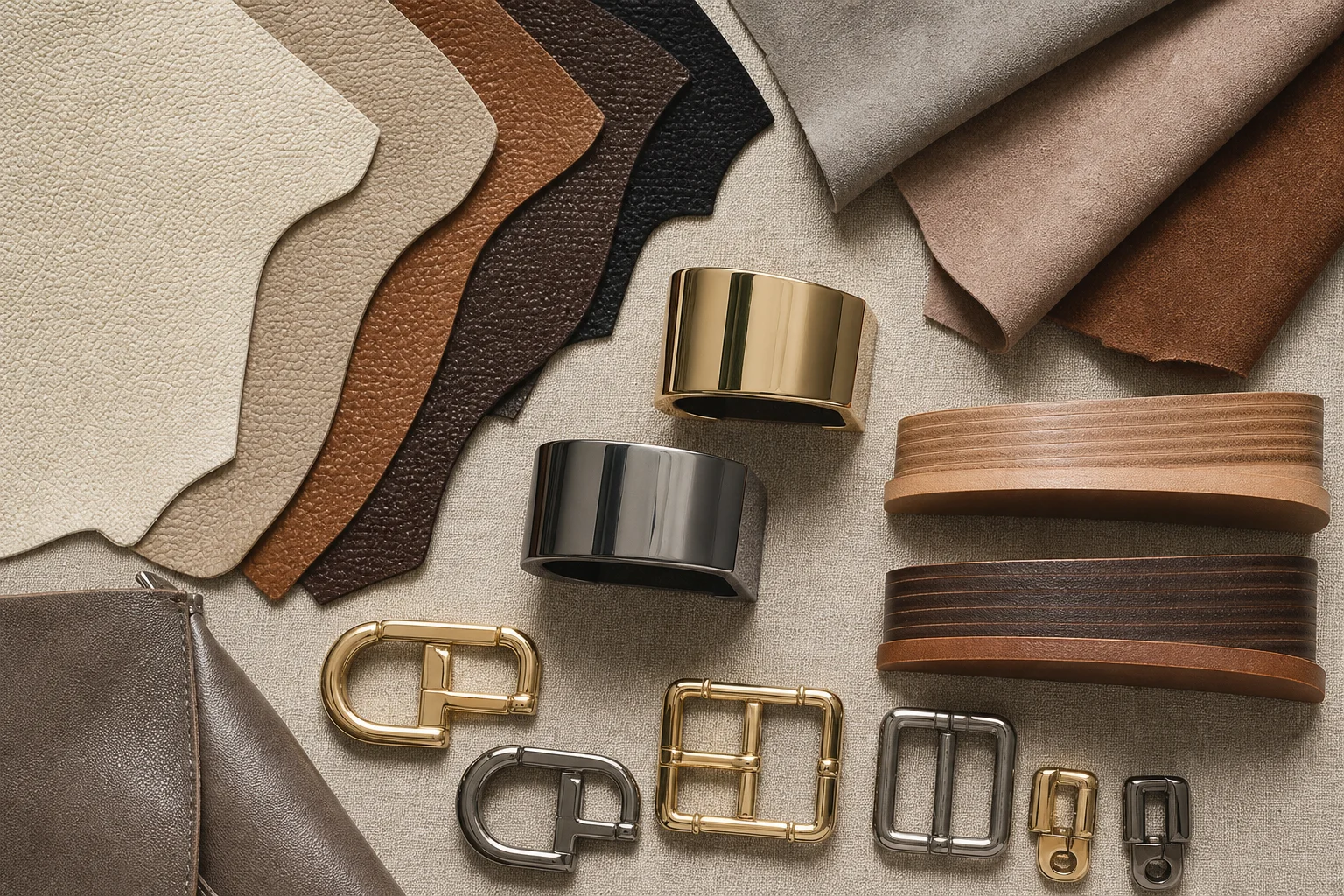
Figure 2: Curated full-grain leathers, electroplated heel finishes, and custom metallic hardware.
- Full-Grain Calfskin & Nappa (1.0mm – 1.2mm): Natural grain elasticity, smooth break-in, and superior breathability for timeless pointed-toe pumps and luxury ankle boots.
- Baby Lamb & Kid Suede (0.8mm – 1.0mm): Ultra-plush velvet nap with zero stiffness, ideal for strappy evening heels, slingbacks, and delicate sandals.
- Eco-Friendly Bio-Based Microfiber (0.9mm – 1.1mm): High-tensile vegan leather with consistent grain quality, exceptional abrasion resistance, and sustainability certifications.
- Satin, Silk & Velvet Brocades (0.4mm with Backing): Luxurious evening fabrics reinforced with non-stretch technical interlinings to prevent seam tearing during lasting.
4. Physical Golden Sample Crafting & Fit Testing
Once digital CADs and materials are approved, the factory crafts physical "Golden Samples" for comprehensive tactile, aesthetic, and live fit verification.
Dynamic Wear Trials & Mechanical Compliance
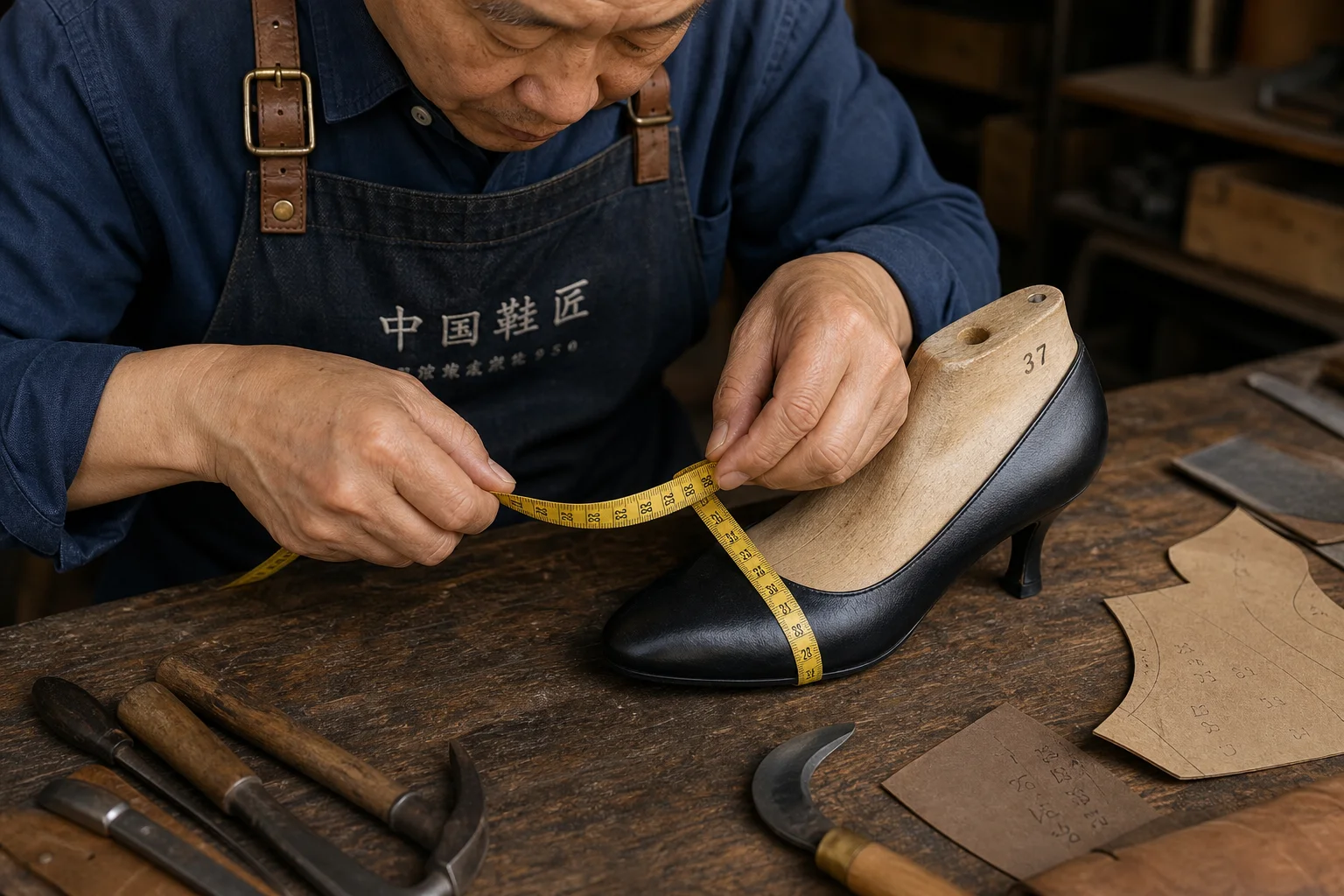
Figure 3: Ball girth verification on sample last to prevent forefoot pressure.
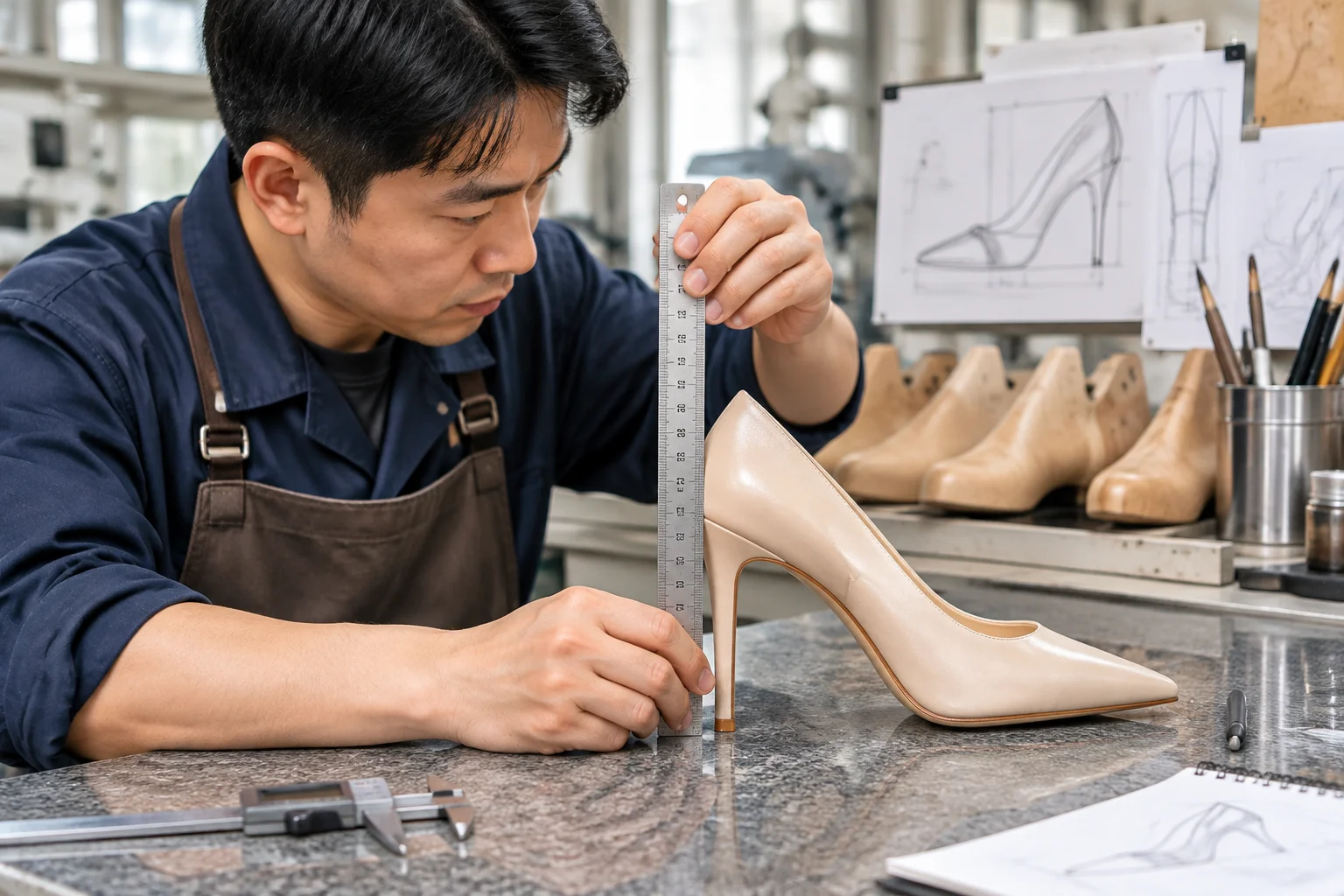
Figure 4: Precision vertical heel height and pitch verification.
- Live Model Fit Testing: Prototypes are tested across target shoe sizes on live fit models to evaluate dynamic flex, arch contact, and walking stability.
- SATRA TM21 / ASTM Mechanical Verification: Laboratory flex tests confirm that the tempered steel shank resists 500,000 continuous steps and the heel block withstands 1.0 kN pull-off force.
- Fast Revision Loop: Sample feedback adjustments (such as expanding toe box girth by 1.5mm or lowering pitch by 3mm) are implemented and resampled within 5 to 7 business days.
5. Tooling Strategy: Custom Heel Molds vs. Open-Mold Flexibility
Tooling expenditure is often the single largest upfront hurdle for independent footwear collections. Choosing between custom proprietary tooling and open-mold archives determines both budget allocation and speed-to-market.
Proprietary Custom Heel Mold
- Tooling Cost: $1,500 – $3,500 per mold set
- Development Window: 30 – 45 days
- Strategic Role: 100% unique brand silhouette
- Best For: Core collections (>1,000 pairs)
Solefina Open-Mold Archive
- Tooling Cost: $0 mold investment
- Sampling Window: 7 – 10 days
- Strategic Role: 300+ tested heel profiles
- Best For: Agile launches (500 pairs MOQ)
6. Scaled Bulk Production & 5-Gate Quality Control
After sample sign-off, production transitions into mass cutting, skiving, stitching, lasting, heel assembly, and finishing.
Pre-Shipment 5-Gate QC Protocol
- Symmetry & Vertical Balance: 100% inspection on precision granite surface plates for zero lateral tilt (< 1.0mm tolerance).
- Tread Contact Alignment: Verifying that the forefoot sole and heel top lift touch the ground simultaneously and flush.
- Heel Torque Resistance: Mechanical hand-torque test to ensure zero lateral deflection or creaking.
- Metal Detection & Cleanliness: 100% metal detector scan to ensure zero broken needles or exposed fastening tacks.
- D65 Color Matching & Packaging: Final visual check under D65 standard light, paired with custom branded packaging.
Frequently Asked Questions (FAQ)
What is the minimum order quantity (MOQ) for custom high heel manufacturing?
At Solefina, our standard flexible production starts at 500 pairs per style and colorway. This allows emerging and boutique footwear brands to launch complete size runs without excessive inventory liability.
Can I customize high heels if I only have sketches or inspirational photos?
Yes. Our R&D team regularly works with 2D sketches, moodboards, or physical reference samples. We create complete 3D CAD blueprints, assist with material curation, and produce initial prototypes within 7 to 10 business days.
How much does it cost to develop custom heel molds?
Developing a fully custom proprietary heel mold typically ranges from $1,500 to $3,500, depending on heel complexity and materials. Alternatively, brands can utilize our 300+ open-mold library with zero tooling cost and apply bespoke finishes.
How long does the entire customization process take from sketch to delivery?
The typical development timeline: 3D CAD & SLA Prototyping takes 5 to 7 business days; Physical Golden Sample crafting takes 7 to 10 business days; Bulk Mass Production averages 35 to 45 business days.
Ready to Bring Your Custom High Heel Collection to Life?
Partner with Solefina's dedicated OEM/ODM footwear manufacturing facility. Access 300+ stability-verified heel profiles, agile 500-pair MOQs, rapid 7-day sampling, and end-to-end technical engineering support.


