


Executive Summary for Brand Founders & Sourcing Directors
In contemporary e-commerce and retail fashion, women's high heels suffer from an industry-wide return rate of 30% to 35%. Over 70% of these returns stem not from visual design dissatisfaction, but from physical discomfort: heel wobble, arch collapse, and painful forefoot pressure. Bridging the gap between high-fashion aesthetics and true all-day wearability requires treating high heel production as structural engineering. By calibrating last pitch angles, reinforcing cantilevered steel shanks, embedding dual-density cushioning, and leveraging agile tooling strategies, private labels can significantly cut return rates and protect customer lifetime value.
The B2B Economics of High Return Rates in Women's Footwear
For emerging designer labels and established retail brands alike, the women's high heel category delivers some of the highest gross retail margins in the fashion sector. However, high returns rapidly erode these margins through reverse logistics expenses, packaging damage, warehouse restocking fees, and brand reputation loss.
When an online buyer opens a shoe box and experiences ankle instability or acute ball-of-foot pinching within fifteen minutes of wear, product return is inevitable. The root cause is rarely the silhouette or exterior leather. It is almost always a failure of internal structural balance.
Building a profitable high heel collection requires an OEM manufacturing partner that approaches footwear development from an anatomical and mechanical standpoint. When last proportions, steel shank hardness, and heel fastening systems are engineered synchronously, brands achieve dependable fit consistency across all size runs, resulting in higher repeat purchases and lower return overhead.
1. Heel Pitch and Last Engineering: The Foundation of Equilibrium
The shoe last (forma) determines every fundamental line and pressure point of a finished high heel. A frequent pitfall in private label footwear development is attempting to scale heel height on an existing flat or low-pitch last without fundamentally re-engineering the arch rise and heel seat angle.
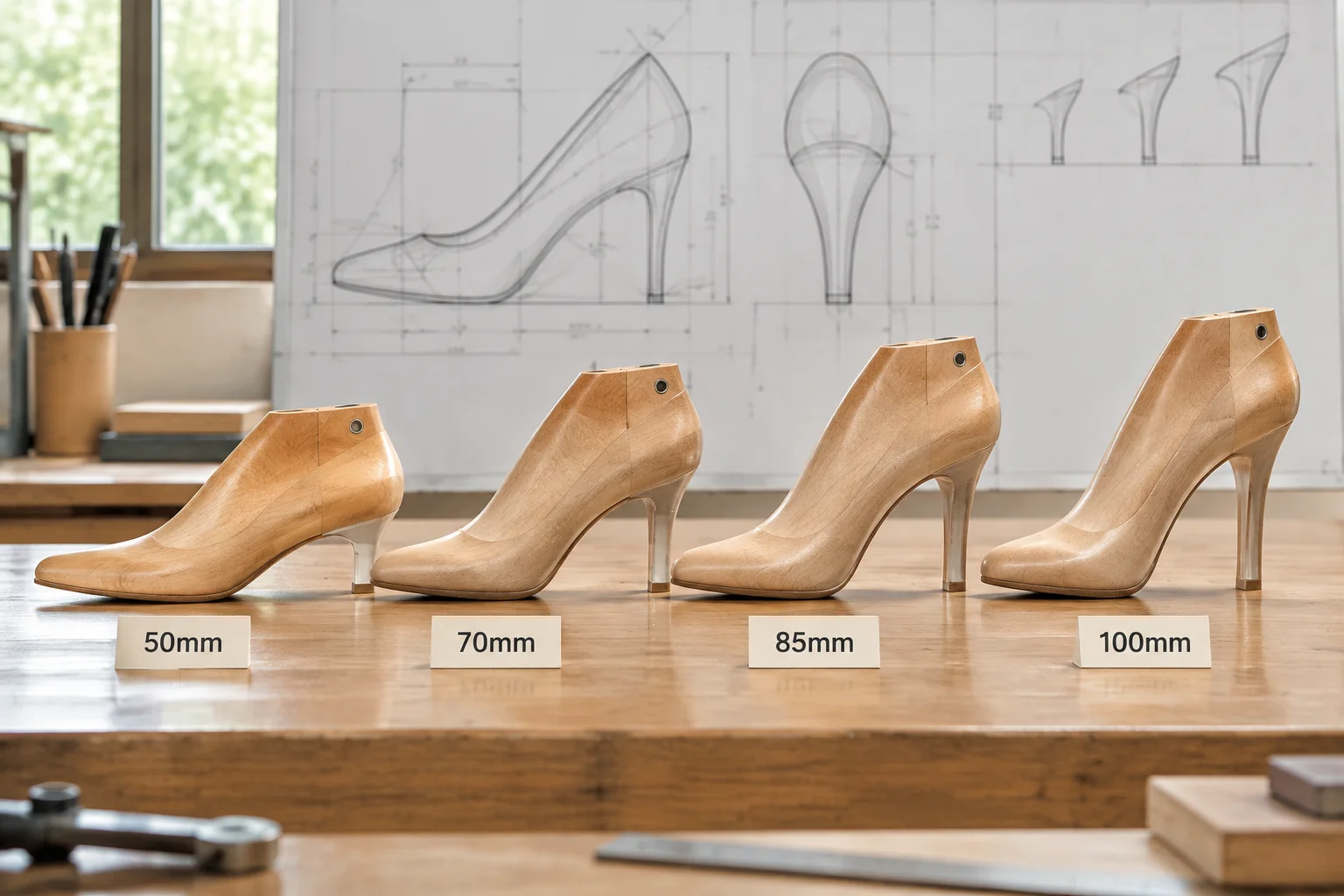
Figure 1: Pitch drop angle and toe spring progression across different heel height categories.
Anatomical Last Alignment Framework
Last Calibration Across Heel Height Categories
- Low & Kitten Heels (30mm – 50mm): Pitch angle ranges between 12° and 18°, with a gentle 2° to 3° heel seat incline. Dynamic body weight distributes relatively evenly (approx. 45% heel / 55% forefoot).
- Mid-Range Commercial Heels (55mm – 75mm): Pitch angle increases to 22° – 30°, shifting approximately 70% of gravitational force onto the metatarsal heads. Toe spring must be calibrated to 10mm – 12mm to maintain fluid gait transition.
- High Stilettos & Evening Pumps (80mm – 105mm): Pitch reaches 35° – 45°, concentrating up to 85% of dynamic load on the forefoot. At this height, last geometry incorporates a deeper calcaneus cup (26mm – 30mm radius) to prevent foot forward sliding.
- Platform Stilettos (110mm+): Platform elevations offset the effective pitch angle to 38° – 48°. A rigid forefoot rocker sole is required to guide foot roll-off without forcing excessive toe flexion.
Preventing Forward Foot Slide (Metatarsal Jamming)
When the heel rises above 75mm, gravity pulls the foot downward into the toe box, compressing the first and fifth metatarsophalangeal joints. Advanced last design counters this through three precise engineering adjustments:
- Deep Calcaneus Seat Radius: The rear of the last cradles the heel bone, creating a mechanical block that anchors the foot firmly in the rear quarter.
- Plantar Arch Matching: The curve of the last waist maintains seamless contact with the medial longitudinal arch, transferring up to 18% of gravitational load back into the midfoot.
- Lateral Forefoot Clearance: Even in sharp pointed-toe silhouettes, the interior ball girth retains adequate lateral relief, preventing toe pinching against the internal stiffener.
2. Structural Core: Tempered Steel Shank & Heel Anchoring
A high heel functions as an architectural cantilever. During walking, dynamic impact force travels through the rearfoot and transfers across the narrow waist of the shoe toward the forefoot. Without proper chassis reinforcement, the arch will flex downward, causing the heel to splay backward, destabilize the ankle, and eventually snap.
The Anatomy of a Zero-Defect Chassis
- Heat-Treated Spring Steel Shank: High-carbon steel tempered to a Rockwell hardness of 42 to 48 HRC, profiled with longitudinal rib stiffeners to resist torsional twisting.
- Multi-Ply Reinforced Insole Core: Structural cellulose insole board laminated with high-density vulcanized fiberboard and embedded fiberglass in the rear quarter.
- Multi-Point Fastening Matrix: A heavy-duty central drive screw paired with 3 to 4 barbed ring-shank clinching nails anchored into an injected high-density composite heel dowel.
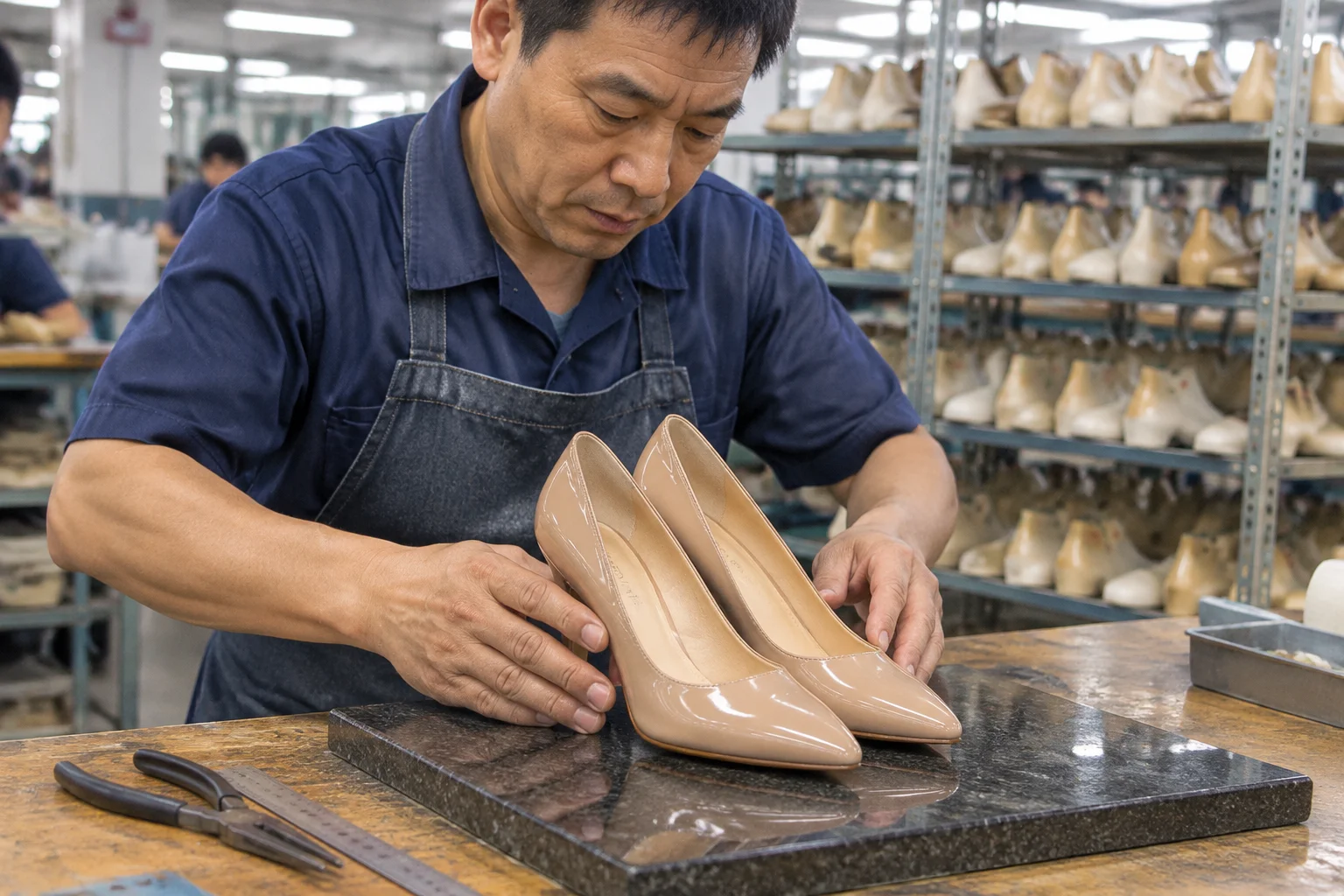
Figure 2: Precision surface plate balance and structural alignment verification in our workshop.
Standardized Mechanical Testing Benchmarks
- Shank Fatigue Life (SATRA TM21): The tempered steel shank must endure a minimum of 500,000 continuous flex cycles under alternating dynamic loads without hairline fracture or permanent deflection.
- Heel Attachment Pull-Off & Impact (SATRA TM144 / ASTM F2232): The joint between heel block and insole foundation must withstand a minimum separation force of 0.8 kN to 1.2 kN (80kg – 120kg) in lateral impact and tensile pull-off testing.
- Heel Pin Impact Durability (SATRA TM20): The injected heel body (polycarbonate, high-impact ABS, or die-cast aluminum alloy) must withstand repeated impacts of 0.68 Joules without micro-cracking.
3. Ergonomic Cushioning in Slim Fashion Silhouettes
Traditional luxury high heels often rely on basic fiberboard and thin leather sockliners, leaving the wearer with zero shock absorption. Modern consumers expect the comfort of athletic footwear concealed inside elegant high-fashion profiles. Achieving this requires multi-layer composite footbeds engineered without adding visible bulk to the topline.
Multi-Density Insole Cross-Section
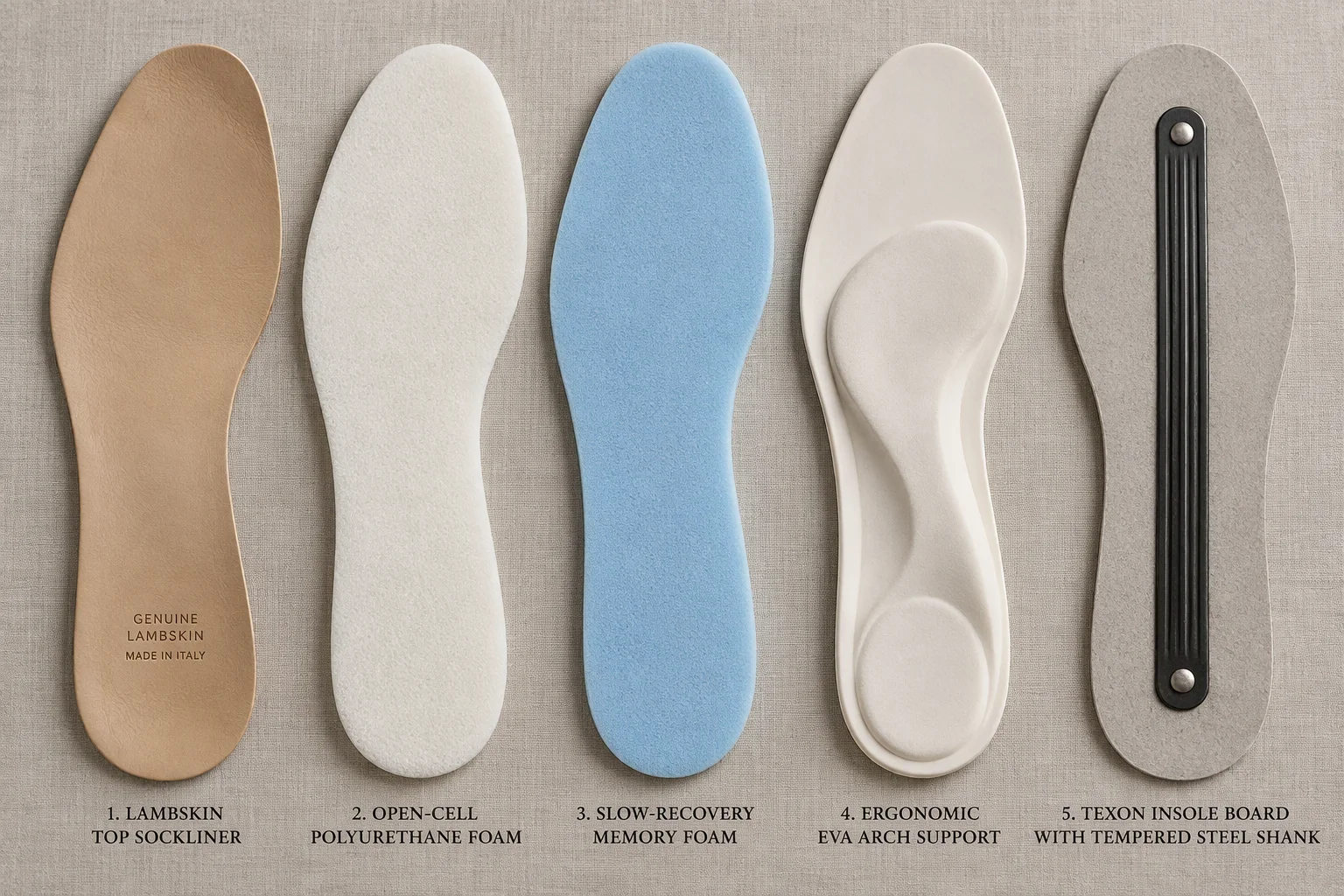
Figure 3: Multi-density insole layering with rigid Texon structural board and tempered steel shank.
High-Performance Insole Components
- Microcellular Forefoot Cushioning: Open-cell polyurethane foam inserts retain over 95% of their original rebound thickness throughout the shoe's lifecycle, mitigating ground impact shock.
- Anatomical Arch Cookies: Sculpted EVA arch inserts fill the natural void between the foot's plantar fascia and the shoe waist, providing continuous midfoot support.
- Non-Slip Suede Sockliners: Brushed microfibers or top-grain lambskin sock covers provide gentle friction that prevents internal foot slippage.
4. Materials Selection and Precision Lasting Craftsmanship
Upper material selection and lasting execution define both the external refinement and the initial break-in comfort for the consumer.
Material Specifications for High Heel Construction
- Full-Grain Calfskin (1.0mm – 1.2mm): Offers natural tensile elasticity and breathability. Conforms smoothly to last lines with supple break-in characteristics, ideal for luxury pointed-toe pumps and dress boots.
- Goat & Baby Lamb Suede (0.8mm – 1.0mm): Exceptionally soft with velvet-like pile, providing instant step-in comfort for delicate strappy sandals and evening slingbacks.
- Eco-Friendly Microfiber Leather (0.9mm – 1.1mm): Features uniform tensile strength and zero grain defects, providing sustainable brands with high durability and excellent shape retention.
- Silk Satin & Textile Brocades (0.4mm with Interlining): Features zero natural stretch. Requires specialized woven interlinings and non-stretch backings to prevent seam distortion during lasting.
Lasting Precision and Edge Treatment
- Thermoplastic Counters & Toe Puffs: Vacuum-formed thermoplastic stiffeners (0.8mm – 1.2mm) provide rigid heel grip while their edges are feathered to zero thickness, preventing friction blisters along the Achilles tendon.
- Tuck Lasting & Margin Skiving: Upper lasting margins along the waist are skived down to a paper-thin feather edge before cementing, ensuring a completely flush interior floor with no raised ridges underfoot.
5. Tooling Economics: Custom Heel Molds vs. Open-Mold Flexibility
For emerging footwear brands, tooling costs represent a significant capital consideration. Developing proprietary heel molds-including master heel blocks, top lift injection molds, and custom steel shanks-requires substantial upfront investment.
Bespoke Custom Heel Mold
- Capital Investment: $1,500 – $3,500 per mold set
- Lead Time: 30 – 45 days engineering
- Advantage: 100% proprietary silhouette
- Best For: Established volume (>1,000 pairs)
Open-Mold Library + Custom Finish
- Capital Investment: $0 tooling cost
- Lead Time: 7 – 10 days rapid sampling
- Advantage: Pre-tested stability & zero risk
- Best For: Agile launches (300 pairs MOQ)
How Solefina Supports Agile Brand Scaling
- Extensive Open-Mold Archive: Direct access to over 300+ pre-engineered, stability-tested heel lasts, ranging from 45mm modern architectural blocks to 105mm red-carpet stilettos.
- Finishing Customization: Differentiate open-mold heel shapes using electroplating (gold, chrome, gunmetal), genuine stacked leather wrapping, gradient spray lacquering, or transparent tinted acrylics.
- Flexible 300-Pair Minimum Orders: Launch new capsule collections with manageable 300-pair batches per style, allowing brands to test market demand before committing capital to proprietary custom tooling.
6. Pre-Shipment Quality Assurance: The 5-Gate Protocol
To guarantee that every shipped pair meets stringent international retail standards, production orders pass through a comprehensive 5-stage inspection protocol:
- Symmetry and Vertical Alignment: Every pair is placed on a calibrated granite surface plate to verify that left and right shoes stand perfectly vertical with zero lateral tilt (tolerance within 1.0mm).
- Tread Contact Line Check: The heel top lift and forefoot contact patch must rest simultaneously and flush on the horizontal plane without rock or gap.
- Heel Torque Resistance: A manual and mechanical torque check verifies that the heel block exhibits zero lateral deflection or creaking under rotational pressure.
- Insole Lining & Tack Inspection: 100% metal detector screening and visual inspection guarantee flush sock placement, smooth margin feathering, and zero exposed fastening tacks.
- D65 Color Matching & Edge Paint Finish: Upper leathers and hand-inked edge paint are inspected under standardized D65 daylight illumination for exact color consistency across all cut panels.
Frequently Asked Questions (FAQ)
What is the standard MOQ for custom high heel manufacturing?
At Solefina, our flexible production starts at 300 pairs per style and colorway. This allows independent and emerging brands to offer multiple size runs without taking on excessive inventory risk.
How do you prevent heel wobbling and instability in high pumps?
Stability is achieved through three engineering controls: precisely matching the last pitch angle to the exact heel height, utilizing SATRA-certified tempered carbon steel shanks (42–48 HRC), and anchoring the heel with multi-point drive screws and ring-shank nails into high-density composite dowels.
Can you develop custom high heels from designer sketches or 3D CAD files?
Yes. Our engineering team converts 2D sketches into complete 3D CAD models, creates SLA resin prototypes for fit and silhouette evaluation within 5 business days, and handles all mold tooling upon final approval.
What is the typical lead time for prototype sampling and bulk production?
Initial sample prototypes utilizing our open-mold library take 7 to 10 business days. Fully custom lasts with proprietary heel molds take 25 to 30 days including mechanical testing. Bulk production averages 35 to 45 days post-sample sign-off.
Ready to Engineer High Heels with Superior Stability & Low Return Rates?
Partner with Solefina's dedicated footwear engineering facility. Access 300+ stability-verified heel lasts, agile 300-pair MOQs, and rigorous SATRA-compliant quality control.


